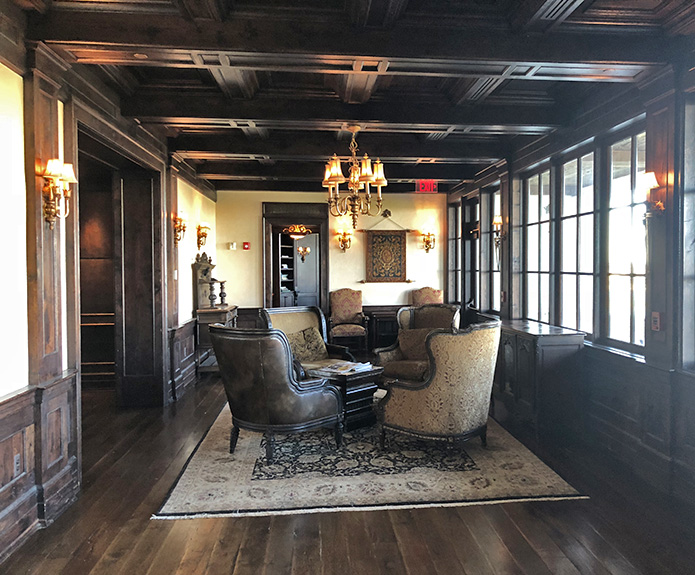
HVAC sound measurement quantifies mechanical-system noise in an occupied space — measured in octave bands and rated against the design criteria (NC or RC) the room is supposed to meet. dL Flow Tech is an independent, NEBB-certified firm that has measured and documented HVAC sound across the Hudson Valley since 1982, confirming that what the engineer specified for quiet is what the building actually delivers.
Get a sound measurement quote: Call (845) 265-2828 or send your project details for a fixed-scope proposal.
What is HVAC sound measurement?
HVAC sound measurement is the testing of mechanical-system noise in a finished space to confirm it falls within the acoustic criteria the design called for. A technician measures the sound level with a calibrated meter, breaks it into octave bands across the audible range, and compares the result to a target — typically a Noise Criteria (NC) or Room Criteria (RC) rating assigned to that type of space. The room either meets its criteria or it doesn't, and the measurement says by how much and at which frequencies.
NC and RC ratings, in plain terms
A single decibel number doesn't capture how a room sounds. That's why HVAC acoustics uses NC and RC curves: they evaluate sound across octave bands so a space is judged on its full frequency signature, not one averaged number. A private office might carry an NC target in the low 30s; a hospital patient room a tighter one in the mid-to-high 20s. We measure the octave bands, plot them against the room's target curve, and report the resulting rating.
Typical sound criteria by space type
| Space Type | Typical NC Target |
|---|---|
| Private offices and conference rooms | NC 30–35 |
| Open offices | NC 35–40 |
| Hospital patient and exam rooms | NC 25–30 |
| Classrooms and lecture spaces | NC 25–30 |
| Courtrooms, libraries, worship spaces | NC 25–35 |
| Performance and recording spaces | NC 20–25 or below |
Why HVAC sound measurement matters
- Occupant comfort and productivity. Excess mechanical noise is fatiguing, hurts concentration, and is one of the most common post-occupancy complaints in offices and institutional buildings.
- Specification and code compliance. Many projects assign NC/RC criteria by room type in the spec, and some — schools especially — fall under acoustic standards requiring documented measurement.
- Speech privacy and intelligibility. Too much noise harms privacy in one setting and intelligibility in another; the right level is a design target.
- Sensitive and regulated spaces. Hospitals, classrooms, courtrooms, worship spaces, and performance venues all have acoustic expectations that have to be verified, not assumed.
- LEED and high-performance goals. Acoustic performance is a recognized part of indoor environmental quality.
Where HVAC noise comes from
- Air handlers and fans — the dominant low-frequency source, transmitted through ductwork and structure.
- Terminal units — VAV and fan-powered boxes above the ceiling, often the culprit in offices and patient rooms.
- Diffusers and grilles — high-frequency hiss and whistle, usually a sign of too much airflow or velocity at the outlet.
- Ductwork — breakout noise and regenerated noise from fittings, dampers, and transitions.
- Pumps, chillers, and rooftop units — plant and packaged equipment radiating into spaces below or nearby.
How we measure HVAC sound
- Confirm the criteria. We pull each space's NC or RC target from the specification.
- Establish conditions. We measure with the HVAC running in its normal operating mode, and capture the background level so the mechanical contribution can be separated from ambient noise.
- Take octave-band readings. Using a calibrated sound-level meter with octave-band analysis, we measure at occupant locations following NEBB procedure.
- Rate against the target. We plot the octave-band data against the room's NC/RC curve, determine the resulting rating, and identify the dominant frequency band where the space exceeds criteria.
- Document and point to the cause. The report gives the measured rating per space, the comparison to target, and — where the data supports it — the likely source.
What your sound measurement report contains
- The instrument and calibration records.
- The design criteria (NC/RC) for each space.
- The octave-band measurements taken and background/ambient readings.
- The resulting rating per room and its margin against target.
- Notes on the dominant noise source or frequency where measured.
Service area
dL Flow Tech performs HVAC sound measurement from New York City north through the Hudson Valley to Albany — Dutchess, Westchester, Orange, Putnam, Rockland, and Ulster counties, the five boroughs, and the Capital Region. See our service-area pages.
Have a room that's too loud — or a criteria to certify? Call (845) 265-2828 or send your project details and we'll quote the sound measurement scope.
Frequently asked questions
- How much does HVAC sound measurement cost?
- It's quoted per project, based on the number of spaces to be measured and the criteria involved. A handful of critical rooms is a different scope than a whole building of rated spaces. Send your project details and the spec's acoustic criteria for a fixed-scope quote.
- What is an NC rating?
- NC (Noise Criteria) is a single-number rating derived from octave-band sound measurements, used to describe how loud a space is in a way that accounts for frequency. A lower NC number means a quieter space.
- Isn't a decibel reading enough?
- Not for HVAC. A single dBA number can't distinguish a low-frequency rumble from a high-frequency hiss, even though they sound completely different to occupants. NC and RC ratings evaluate the octave bands, which is why HVAC acoustics uses them.
- Can you find the source of the noise, not just measure it?
- Often, yes. Because excess noise usually shows up in a specific octave band, the measurement narrows the likely source — a fan, a terminal box, or a high-velocity diffuser. We report the dominant frequency where a space is over criteria.
- Which spaces typically need sound measurement?
- Any space with an acoustic criterion in its spec, and any space where noise is a program requirement — patient rooms, classrooms, courtrooms, conference rooms, worship and performance spaces, and offices pursuing acoustic-quality goals.