Commercial kitchen ventilation is one of the most misunderstood HVAC systems in a building — and one of the most failure-prone. The failure mode is visible: smoke rolls out from under the hood, the kitchen smells in the dining room, the back door won't close against the negative pressure, the health department flags it. Every one of those problems has a root cause in the airflow balance between exhaust and makeup air. dL Flow Tech has surveyed and balanced commercial kitchen ventilation systems from standalone restaurants to large institutional cafeterias, applying NEBB-certified TAB methodology to an environment where most TAB contractors won't go.
Kitchen ventilation problem or new commissioning? Call (845) 265-2828 or describe the issue — most commercial kitchen pressure problems can be diagnosed quickly.
Commercial kitchen and food service facilities we have served
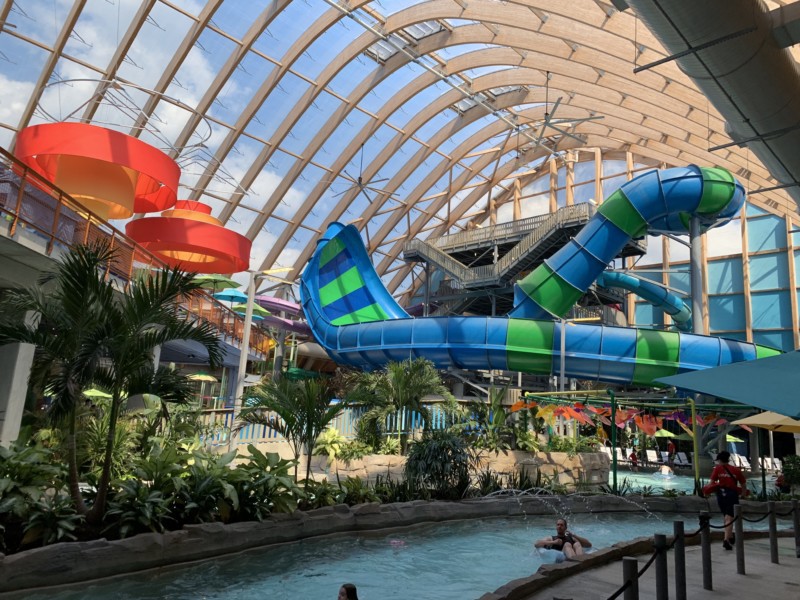
- Kartrite Resort & Indoor Waterpark (Monticello, NY) — large-scale resort with multiple food service venues; comprehensive HVAC commissioning including food service kitchen exhaust and makeup air systems
- Institutional cafeterias — school district, university, hospital, and corporate campus food service facilities throughout the Hudson Valley requiring kitchen exhaust balancing and commissioning
- Commercial restaurant and hospitality projects — standalone restaurants, hotel food service, and banquet/event facilities throughout the service area
How commercial kitchen HVAC TAB works
Hood exhaust verification — NFPA 96 and IMC
NFPA 96 (Standard for Ventilation Control and Fire Protection of Commercial Cooking Operations) specifies minimum exhaust rates for commercial cooking hoods based on hood type (Type I for grease-producing equipment, Type II for heat and moisture only), duty level (light, medium, heavy, extra heavy), and hood geometry. The International Mechanical Code (IMC), as adopted by New York, establishes similar minimum rates. Our TAB measures actual exhaust airflow at each hood with calibrated instruments, compares it to the NFPA 96 and IMC minimum for that hood's configuration, and documents the result.
A hood that tests below its NFPA 96 minimum is not just a comfort problem — it is a fire safety deficiency. Grease-laden exhaust that doesn't fully enter the hood deposits on surfaces above the cooking equipment, creating a fire hazard that the exhaust system was supposed to contain.
Makeup air commissioning
For every CFM of exhaust air removed by kitchen hood exhaust fans, the same CFM must enter the building as makeup air. Makeup air for commercial kitchens typically comes from two sources: a dedicated makeup air unit (MAU) that delivers tempered outside air near the hood face, and the building's general HVAC that provides conditioned air to the kitchen. We commission the makeup air unit, verify its design airflow, and measure the actual kitchen pressure relationship relative to adjacent spaces to confirm the building is not going excessively negative under operating conditions.
The makeup air percentage split matters too: if too much makeup air is delivered through the general HVAC rather than the short-circuit or supply-plenum path near the hood, the kitchen may be adequately supplied overall but the hood capture efficiency is poor. We can document where the supply-exhaust balance sits and recommend adjustments if the hood is not capturing effectively.
Building pressure and cross-contamination
A commercial kitchen that runs at strong negative pressure relative to the dining room creates cross-contamination pathways: kitchen odors are drawn into the dining area through door gaps and openings whenever a door opens. In a restaurant, this is an immediate customer experience failure. In an institutional setting — a school cafeteria or hospital food service — it can be a health issue. We measure the pressure differential between kitchen and adjacent spaces and verify that the system is configured to prevent cross-contamination under normal operating conditions.
Troubleshooting existing kitchen ventilation problems
Many of our commercial kitchen engagements are not new-construction commissioning but existing-facility troubleshooting. A kitchen that worked fine for years and now has smoke spillage has usually experienced one of a few things: the makeup air unit has lost capacity, the exhaust fan belt has slipped, ductwork has been modified, or the cooking equipment has changed. We survey the existing system, measure actual performance, identify the root cause, and provide a written finding and recommendation. This is retro-commissioning applied to a kitchen HVAC system — see our retro-commissioning page.
Hospitality and resort food service
Large resort and hotel food service facilities — like those at Kartrite Resort — involve multiple kitchen environments serving different venue types: a high-volume production kitchen, banquet service, casual dining, and often a pool food service area. Each has different hood configurations and exhaust requirements. Commissioning a resort food service complex requires coordinating TAB across multiple kitchen spaces simultaneously, verifying the combined impact on the building's overall pressure balance, and documenting each space separately for the facilities team that will manage ongoing compliance.
Last updated June 2026
Frequently asked questions
What standards govern commercial kitchen exhaust TAB?
NFPA 96 sets fire-safety exhaust minimums by hood type and duty level. SMACNA's Commercial Kitchen Ventilation guide covers system design. IMC sets code minimums. Our TAB verifies against all three and documents the results for the engineer of record and the AHJ.
Why does makeup air matter in a commercial kitchen?
Hood exhaust removes large air volumes that must be replaced. Insufficient makeup air creates excessive negative pressure — causing door problems, drafts, and gas equipment combustion issues. Properly commissioning the makeup air system is the second half of kitchen HVAC TAB.
How do you balance multiple hoods on a shared exhaust system?
The fan must move total design airflow for all hoods combined; branch dampers are proportioned so each hood delivers its design fraction. We measure each hood independently, adjust, and verify the system at all-hoods-operating conditions.
Do you work on institutional cafeterias?
Yes. School district, university, hospital, and corporate campus cafeterias all use commercial cooking equipment requiring the same hood exhaust and makeup air commissioning. We serve institutional food service facilities throughout the Hudson Valley.
Can you troubleshoot a kitchen with smoke or pressure problems?
Yes. Most commercial kitchen pressure problems are diagnosable quickly. We survey the existing system, measure actual exhaust and makeup air quantities, identify the imbalance cause, and provide a remediation recommendation. See our retro-commissioning page.
Kitchen Ventilation Issue?
Describe the problem and we can usually diagnose it before we arrive. Call or send details.
Request a Quote (845) 265-2828Relevant Services