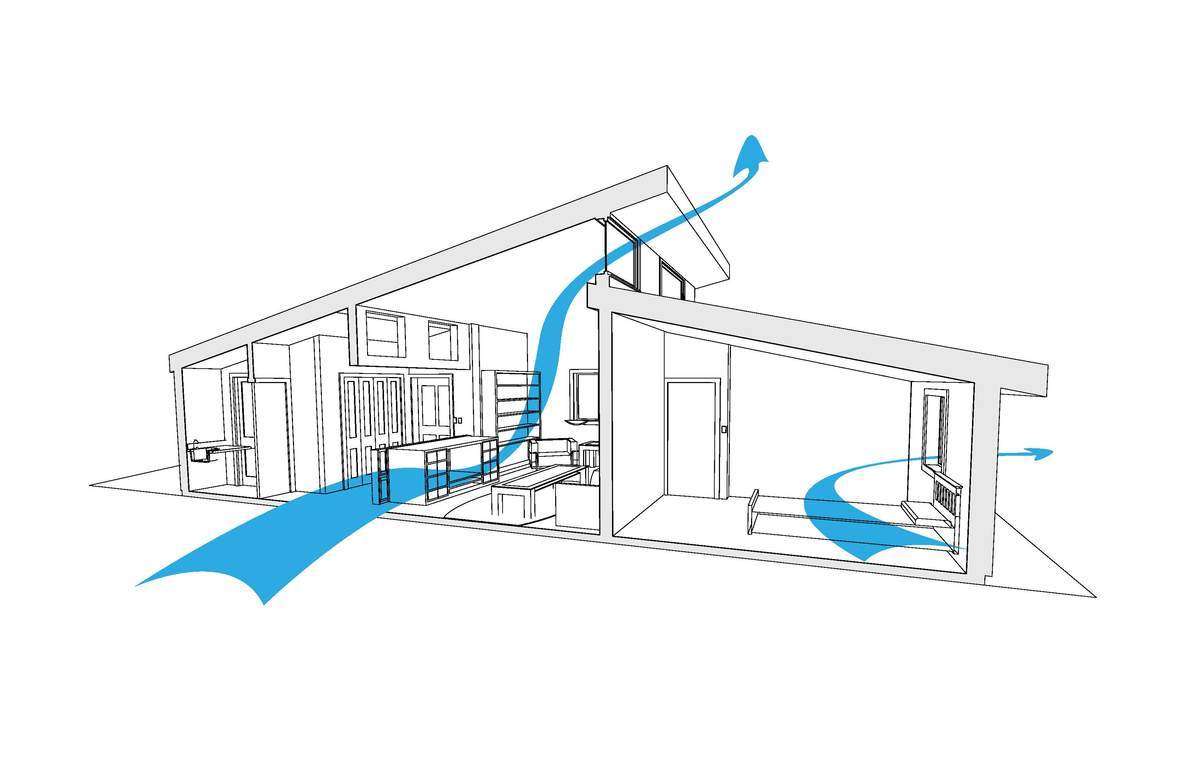
Air balancing is the part of HVAC testing and balancing that sets supply, return, and exhaust airflow to the engineer's design quantities at every diffuser, grille, and terminal — then documents it. dL Flow Tech is an independent, NEBB-certified firm that has balanced commercial and institutional air systems across the Hudson Valley since 1982. If rooms won't hold temperature or pressure, this is the work that fixes it.
Get an air balancing quote: Call (845) 265-2828 or send your drawings for a fixed-scope proposal.
What is air balancing?
Air balancing is the measurement and adjustment of airflow through an HVAC system so every space receives the amount of air it was designed to receive — no more, no less. A technician measures airflow at each outlet with calibrated instruments, then positions balancing dampers and sets fan speed until each branch and terminal delivers its design CFM within tolerance. The result is documented in a balancing report.
It's the most visible half of a TAB scope. When people say a building "feels off" — one office freezing while the next bakes, a lobby door that's hard to pull open, a conference room that goes stuffy when it fills up — the cause is almost always an air system that was never balanced, or one that's drifted out of balance. Air balancing brings the airflow back to what the drawings actually called for.
Air balancing is one component of full testing, adjusting, and balancing. On a complete TAB scope we balance the air side and the water side together, because they interact. When a project needs only the air side addressed, air balancing can be performed on its own.
How we balance an air system
Balancing is methodical, not trial and error. Our field sequence on every job:
- Establish the design. Before measuring, we pull the required airflow for every outlet from the drawings and note the tolerance the spec allows (typically ±10%).
- Measure as-found. We read airflow at each diffuser and grille with a calibrated flow hood, and traverse ducts with a pitot tube and micromanometer where direct readings aren't reliable.
- Set the fan first, then proportion. We confirm the air handler is moving its total design airflow — adjusting sheaves or the VFD as needed — before touching branch dampers.
- Proportion the branches and terminals. We set every balancing damper so each zone and outlet hits its design quantity. Because adjusting one branch shifts the others, this is iterative.
- Verify and document. We re-read the adjusted system, confirm every point holds tolerance, and record design-versus-actual for each outlet in a NEBB-format report the engineer can stamp.
Constant-volume and VAV systems are balanced differently
A constant-volume (CAV) system moves a fixed quantity of air, so balancing means proportioning the dampers so each outlet's share is correct. A variable-air-volume (VAV) system changes airflow as zone loads change, so balancing means verifying each VAV box at both its maximum and minimum airflow setpoints, confirming the box controller and the air handler's static-pressure control work together across the system's full operating range.
Signs your building needs air balancing
- Uneven temperatures — rooms on the same system that never match, hot and cold spots that move with the seasons.
- Rooms that won't reach setpoint no matter what the thermostat says — usually too little supply air reaching that zone.
- Pressure problems — doors that slam or won't latch, whistling gaps, a lobby that pulls air in every time the entrance opens.
- Stuffiness in occupied rooms — conference rooms or classrooms that degrade as they fill, a sign outdoor air and supply aren't keeping up.
- A new fit-out or renovation that moved walls, added load, or rerouted ductwork — the old balance no longer matches the new floor plan.
Air balancing for commercial and institutional buildings
Most of our air balancing is on the demanding end of the market, where airflow isn't just a comfort issue but a compliance one. In healthcare, supply-and-exhaust relationships set the pressurization that keeps a clean room positive and an isolation room negative — behind projects like the Center for Discovery's Specialty Children's Hospital and Northwell Health's Northern Westchester Hospital. In laboratories, including Pepsi's R&D facility in Valhalla, room airflow ties directly to fume-hood performance. See our Industries pages.
Why use a NEBB-certified air balancing contractor
As a NEBB-certified firm, our readings come from instruments on a documented calibration schedule, our procedures follow a recognized national standard, and our report carries a conformance certification that satisfies specifications calling for balancing by a certified TAB agency. We also work independent of the installing mechanical contractor, so the air balancing report is genuine third-party verification.
What your air balancing report contains
- The instrument list with each device's calibration date.
- Design-versus-actual airflow for every diffuser, grille, register, and terminal, with the percentage deviation.
- Air handler and fan data — total airflow, external static pressure, and motor readings.
- Outdoor-air and exhaust quantities, documenting the ventilation the design called for.
- Deficiency notes flagging anything outside tolerance.
- A signed certification page confirming the work was performed to NEBB procedure.
Service area
dL Flow Tech balances air systems from New York City north through the Hudson Valley to Albany — Dutchess, Westchester, Orange, Putnam, Rockland, and Ulster counties, the five boroughs, and the Capital Region. See our service-area pages for detail.
Have rooms that won't hold temperature? Call (845) 265-2828 or send your project documents and we'll quote the air balancing scope.
Frequently asked questions
- How much does air balancing cost?
- It's quoted per project, because the price tracks the number of outlets, the system type, and the tolerance required. A single rooftop unit over an open office is a small scope; a multi-floor system with hundreds of terminals is not. Send the mechanical drawings for a fixed-scope quote.
- How long does air balancing take?
- A small system can be a single day. A large or multi-zone building, especially one needing certified pressure relationships, can run several days. We give a realistic schedule with the quote after reviewing the drawings.
- Is air balancing the same as duct cleaning?
- No — they're unrelated. Duct cleaning removes dust from ductwork. Air balancing measures and adjusts how much air flows to each space. A clean duct delivering the wrong airflow still leaves rooms uncomfortable.
- Can air balancing fix uneven temperatures between rooms?
- Usually, yes. Uneven temperatures on a shared system are most often an airflow distribution problem. Balancing redistributes the air to the design quantities, which evens the temperatures out.
- Do I need air balancing for code or LEED sign-off?
- Often. Energy codes, LEED, and many local authorities require a documented balancing report before a system is accepted. We provide the NEBB-format report that satisfies those requirements.
- Can you balance just one floor or one zone?
- Yes. If a renovation or a complaint is confined to part of a building, we can scope air balancing to that area — though we'll check that the section isn't being affected by the air handler or shared trunk serving the rest of the floor.
- What do you need from me to quote air balancing?
- The mechanical drawings and the project's TAB specification section are ideal. For an existing building with no drawings, a walk-through and an equipment list let us scope it. Either way we return a fixed-scope proposal.