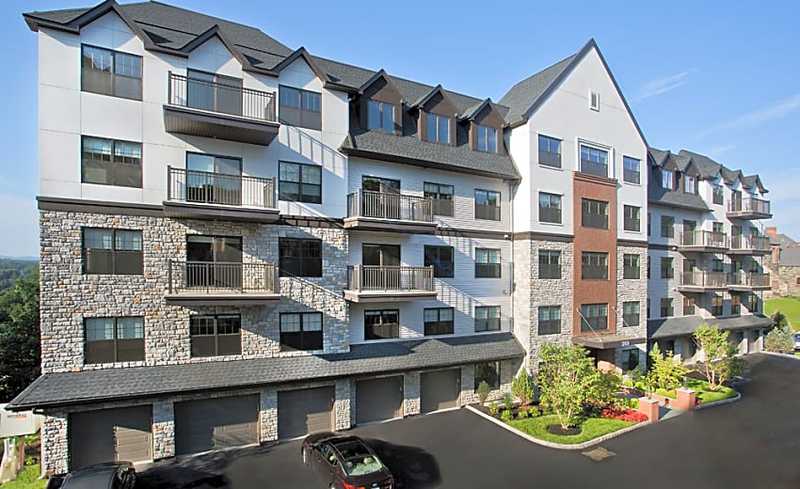
Senior living and multifamily HVAC occupies the territory between commercial and healthcare in both complexity and consequence. A corridor pressurization system that doesn't work means cooking odors and airborne contaminants migrate between units — a daily quality-of-life failure in any apartment building, and a genuine health concern in a facility housing immunocompromised elderly residents. A bathroom exhaust system that underperforms drives moisture into the building envelope. dL Flow Tech has balanced and certified HVAC systems in senior living communities and large multifamily buildings throughout the Hudson Valley, producing the documentation that satisfies NYS DOH licensure requirements, energy code compliance, and owner-acceptance commissioning.
Senior living or multifamily project? Call (845) 265-2828 or send your scope for a fixed-fee proposal.
Facilities we have served
- Fort Hill Apartments — large multifamily residential facility; full HVAC TAB including hydronic system balancing, corridor pressurization, and exhaust verification
- The Club at Briarcliff Manor (Briarcliff Manor, NY) — residential community; HVAC TAB and hydronic balancing
- Senior living and assisted living facilities — multiple licensed senior housing facilities throughout Westchester, Dutchess, and the Hudson Valley; TAB scopes coordinated with NYS DOH facility construction review
HVAC systems in senior living and multifamily buildings
Corridor and common-area ventilation
In most multifamily and senior living buildings, corridors are served by dedicated makeup air units that deliver conditioned outside air to the corridor. The corridor pressure relationship — typically slightly positive relative to individual units — drives stale unit air into the unit exhaust system rather than into the corridor. Getting this pressure relationship right requires balancing the makeup air supply against the unit exhaust capacity across the entire floor. An imbalance anywhere on the floor disrupts the pressure gradient for all units on that floor.
Unit and bathroom exhaust systems
Multi-story residential buildings use centralized shaft exhaust systems that serve multiple floors from a single rooftop fan. Balancing a shaft exhaust system is a proportioning problem: the fan at the top of the shaft must be sized to exhaust the correct total from all units, while each branch takeoff must be sized or throttled to deliver each unit's correct exhaust quantity. A system that works correctly on the top floor often under-exhausts the lower floors because the shaft friction is lower. We balance these systems floor by floor and verify that the unit pressurization relationship is maintained throughout the building height.
Hydronic heating and cooling systems
Senior living communities and multifamily high-rises typically use central chiller and boiler plants serving fan coil units in each unit and common area. Hydronic water balancing is the sister scope to air balancing — ensuring each fan coil receives its design flow rate so that heating and cooling performance is uniform across the building. Units at the end of a long loop consistently underperform if the hydronic system is not properly balanced, resulting in resident complaints that the end-of-corridor units are always too hot or too cold.
NYS DOH and licensing requirements
Assisted living, enriched housing, and adult care facilities in New York are licensed by the NYS Department of Health under Article 7 of the Public Health Law. Facility construction and renovation is subject to DOH review, which includes examination of the HVAC mechanical design for compliance with ventilation standards. Our TAB report — certified by NEBB — provides the documentation the facility operator needs for the DOH construction review and ongoing facility inspection compliance.
Energy code compliance for multifamily
New York State's energy code requires certified HVAC TAB for most commercial and large multifamily construction. The TAB report documents that HVAC systems are set to design conditions — a requirement under IECC and ASHRAE 90.1 commissioning provisions. We provide the certified report that satisfies the energy code requirement and the building permit close-out. See our LEED and energy code compliance page for detail.
Last updated June 2026
Frequently asked questions
What ventilation standards apply to assisted living and memory care?
ASHRAE 62.1 for commercial-licensed portions; portions of ASHRAE 170 if skilled nursing components are present. Our reports document compliance with the applicable standard for each facility type, formatted for NYS DOH licensure review.
Why is corridor pressurization important in senior living buildings?
It prevents smoke migration (fire safety) and stops unit-level contaminants — cooking odors, bathroom exhaust — from entering corridors and adjacent units. In senior living, where residents may be immunocompromised, this is a health issue, not just a comfort one.
What does TAB for a large multifamily building involve?
Balancing the central hydronic plant, corridor makeup air and exhaust systems for each floor, verifying unit ventilation, and documenting corridor pressurization — similar in scope to a hotel. See our hydronic balancing page for the water-side scope.
Do you provide TAB for new multifamily construction under IECC?
Yes. NYS energy code requires documented TAB for new multifamily construction above a certain size. We provide the certified report for code compliance and building permit close-out.
Can you rebalance an existing senior living facility with ventilation complaints?
Yes. Our retro-commissioning service identifies the root cause, documents current performance, and provides a remediation scope — resolving the odor, comfort, or pressure complaints that indicate an out-of-balance system.
Senior Living or Multifamily?
Send your scope for a fixed-fee proposal — new construction or existing-building survey.
Request a Quote (845) 265-2828Relevant Services